

How does drying prevent aflatoxin in chilli and turmeric? By shortening the time the product spends in the moisture range where moulds grow and make toxin. The Codex code of practice for mycotoxins in spices identifies water activity (aw) 0.80–0.95 as that window and recommends drying to aw 0.65 or lower. A dryer cannot remove aflatoxin that has already formed. It can only stop more forming, so the clock starts at harvest. The EU limit for chilli and turmeric is 5 µg/kg aflatoxin B1 and 10 µg/kg total. This guide is for spice processors, exporters and farmer producer organisations buying mechanical dryers.
Moisture figures are on a wet basis. Water activity (aw) is a separate measure of how available that water is to microbes; 1.0 is pure water.
What changed for Indian chilli exports to the EU in 2026?
The EU removed its extra aflatoxin border checks on Indian capsicum from 30 June 2026, but the limits still apply and rejections continue. That shifts the burden to the exporter’s own process control and testing.
- A GAFTA circular (15 June 2026) summarised Implementing Regulation (EU) 2026/1206: Capsicum peppers from India were delisted for aflatoxins, while ethylene oxide checks on several Indian spices, including turmeric, continue.
- FIEO’s weekly RASFF digest on the Indian Trade Portal (27 October 2026) listed a Bulgarian border rejection of crushed chilli from India for aflatoxins on 22 October 2026, rated serious, with the product destroyed.
- The limits are set by Regulation (EU) 2023/915: 5 µg/kg aflatoxin B1 and 10 µg/kg total aflatoxins for dried Capsicum, pepper, nutmeg and turmeric; ochratoxin A 20 µg/kg for Capsicum and 15 µg/kg for other dried spices.
When do aflatoxin and ochratoxin form during drying?
Mostly in the middle stage of drying, when the product is still damp but losing water fast. The Codex Code of Practice CXC 78-2017 describes three stages:
| Stage | Water activity | Mould risk |
|---|---|---|
| 1. Fresh, slight moisture loss | Above 0.95 | Unsuitable for aflatoxin and OTA producers, but other moulds, yeasts and bacteria can spoil product held too long |
| 2. Main moisture loss | 0.95 to 0.80 | Favourable for aflatoxin- and OTA-producing fungi |
| 3. Final drying | Below 0.80 | Not favourable; aim for 0.65 or lower for storage |
Codex says the most important control is the time spent between aw 0.80 and 0.95, and that five days or less in the drying yard prevents aflatoxin and OTA accumulation. It also says treatments applied after drying do not reduce mycotoxins already formed. Codex product standards give final moisture limits: 11% for dried chilli and paprika (CXS 353-2022, with up to 15% for some varieties), and 12% for whole or cut turmeric and 10% for ground turmeric (CXS 359-2024).
Where does a mechanical dryer help, and where does it fail?
A mechanical dryer can take chilli or cured turmeric through the risk window in hours rather than days, independent of rain and dew. It fails when the design or operation creates new damp zones. The common failure points are:
- Waiting before drying. Product held in bags or heaps overnight spends that time at high aw. Codex advises starting on the day of harvest.
- Deep or uneven beds. Wet pockets in a belt or tray dryer can stay in the risk window long after the average moisture looks fine. Spread evenly and check the bottom layer.
- Thick turmeric fingers. Boiled whole rhizomes dry slowly from the inside. Track the core, not just the surface.
- Humid recirculated air. Heat-recovery loops that return wet air to the last zone can slow final drying. Watch relative humidity, not only temperature.
- Warm bagging. Bagging warm product in humid air leads to condensation and surface re-wetting. Cool first.
- Dirty dryers. Old residues and fines carry spores into each new batch. Cleaning belts and plenums is part of mycotoxin control.
Temperature still has to be limited for colour and pungency. Our sister site covers red chilli colour loss during drying, grinding and storage.
How much water must the dryer remove? A worked example
For 1,000 kg of fresh red chilli at an assumed 75% moisture dried to 10%, the dryer removes about 722 kg of water and delivers about 278 kg of product. Dry matter is 250 kg; product = 250 ÷ 0.90 = 278 kg; water = 1,000 − 278 = 722 kg.
| Feed (1,000 kg) | Dry matter | Product | Water removed |
|---|---|---|---|
| Fresh red chilli, 75% → 10% | 250 kg | 278 kg | 722 kg |
| Cured turmeric, 70% → 10% (ground grade) | 300 kg | 333 kg | 667 kg |
| Partly sun-dried chilli, 40% → 10% | 600 kg | 667 kg | 333 kg |
Feed moistures are illustrative; measure your own lots. The table shows why a “dryer capacity” figure means little until you state whether it is wet feed, water evaporated or product. A 1 t/h wet-chilli dryer makes under 300 kg/h of dried chilli.
What should an aflatoxin control plan for the drying step include?
- Record harvest time and drying start time for every lot; set a maximum hold time.
- Measure moisture and, where possible, water activity at dryer exit and before packing; calibrate meters each season, as Codex advises.
- Set a dryer exit target below the Codex moisture limit, with margin for storage.
- Keep lots and harvest days separate; do not blend a mouldy lot into a clean one (EU rules also prohibit mixing non-compliant with compliant food).
- Cool before packing and store off the floor in dry, ventilated rooms.
- Test the shipped lot for aflatoxin B1, total aflatoxins and ochratoxin A against the buyer’s market limits.
Which dryer types are used for chilli and turmeric?
Multi-zone belt and tray-belt dryers are the usual choice for whole chilli, turmeric fingers and slices. GTI’s spice drying systems page lists mesh belt dryers for turmeric fingers, ginger slices and chilli; heat pump dryers for low-temperature premium spices; and fluid bed and vibratory fluid bed dryers for crushed spices and granules. GTI has also published guides for chilli and turmeric dryers.
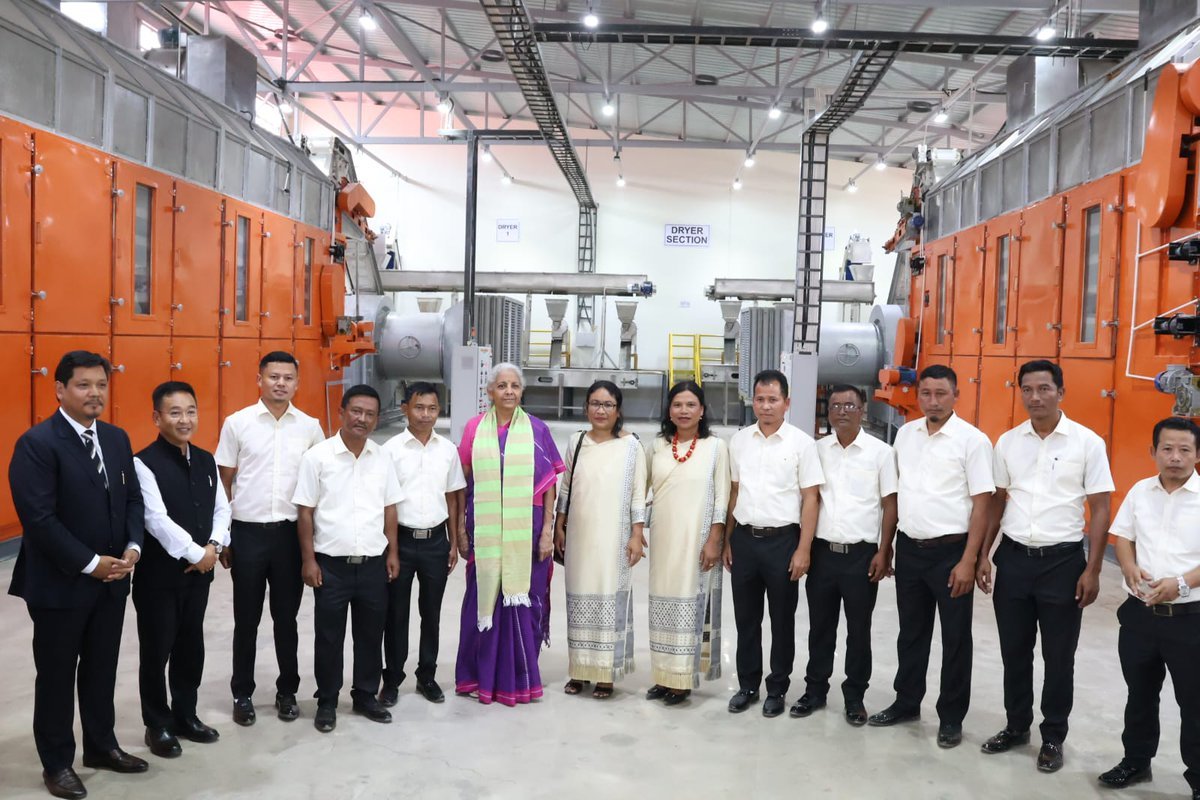
As a published reference, GTI reports (19 June 2026) that it supplied multilayer tray-type belt dryers for ginger, turmeric and chilli at the Eastern Ri-Bhoi Organic facility in Meghalaya. No aflatoxin results from that plant are published, and none are implied here.
Frequently asked questions
Regulation (EU) 2023/915 sets 5 µg/kg for aflatoxin B1 and 10 µg/kg for total aflatoxins in dried Capsicum (chilli, paprika) and turmeric. For ochratoxin A it sets 20 µg/kg for Capsicum and 15 µg/kg for other dried spices.
No. The Codex code of practice CXC 78-2017 states that mould-reducing treatments applied after drying do not reduce mycotoxins formed earlier in the chain. Prevention during harvest, drying and storage is the control.
Codex CXC 78-2017 says a maximum water activity of 0.65 is generally sufficient to protect spices from fungal damage. Aflatoxin- and ochratoxin-producing fungi grow mainly between water activity 0.80 and 0.95.
The increased border checks for aflatoxins in Indian Capsicum were removed by Implementing Regulation (EU) 2026/1206 from 30 June 2026. The limits still apply to every consignment, and a lot of Indian crushed chilli was rejected for aflatoxins on 22 October 2026.
About Genex Tech Industries LLP (GTI Group)
Genex Tech Industries LLP (GTI Group) designs and manufactures belt, heat pump and fluid bed dryers, including the spice drying systems described on gtidryers.com. On this site, see our mesh belt dryer page and our comparison of heat pump and hot-air dryers for herbs and spices. The head office is at 10C Middleton Row, Kolkata 700071, India.
Sources and authorship
- Codex Alimentarius, CXC 78-2017 Code of Practice for the Prevention and Reduction of Mycotoxins in Spices; CXS 353-2022 (dried chilli pepper and paprika); CXS 359-2024 (turmeric).
- Commission Regulation (EU) 2023/915 on maximum levels for contaminants in food (consolidated 19 August 2026).
- Commission Implementing Regulation (EU) 2026/1206, as summarised by GAFTA circular GN/2026/107, 15 June 2026.
- FIEO RASFF alert digest, Indian Trade Portal, 27 October 2026 (RASFF notification of 22 October 2026).
- Food Tech Projects, report on the Eastern Ri-Bhoi Organic spice facility, 19 June 2026.
- Published spice, chilli and turmeric dryer pages of Genex Tech Industries LLP (GTI Group).
The mass balances are illustrative calculations from stated assumptions, not measurements from any plant. This article does not certify compliance with any regulation. It was prepared by the editorial team of Genex Tech Industries LLP (GTI Group) with AI editorial assistance. It has not been reviewed by a named engineer or food safety specialist, and no individual is cited as having approved the technical content.
Next step
Specifying a chilli or turmeric dryer for export-grade product? Email mktg@gtidryers.com or use the contact page. Send the spice and form (whole, sliced, cured), fresh and target moisture, daily intake in tonnes, harvest season, available fuel and the installation location.