
How do you add capacity to an existing drying line? First find the real bottleneck, then fix that one constraint. A drying line can be limited by heat input, airflow, residence time on the belt or bed, upstream preparation, downstream cooling and packing, utilities, or simply the number of days it runs. A 24–72 hour performance survey with a mass and energy balance usually shows which stage is at its limit. The fix may be an operating change, a heater or fan upgrade, an added zone or after-dryer, pre-dewatering, or a parallel line. This guide is for plant managers, project engineers and investors planning a brownfield expansion of a belt, band, fluid bed or spray drying plant.
Why does debottlenecking matter for dehydration plants now?
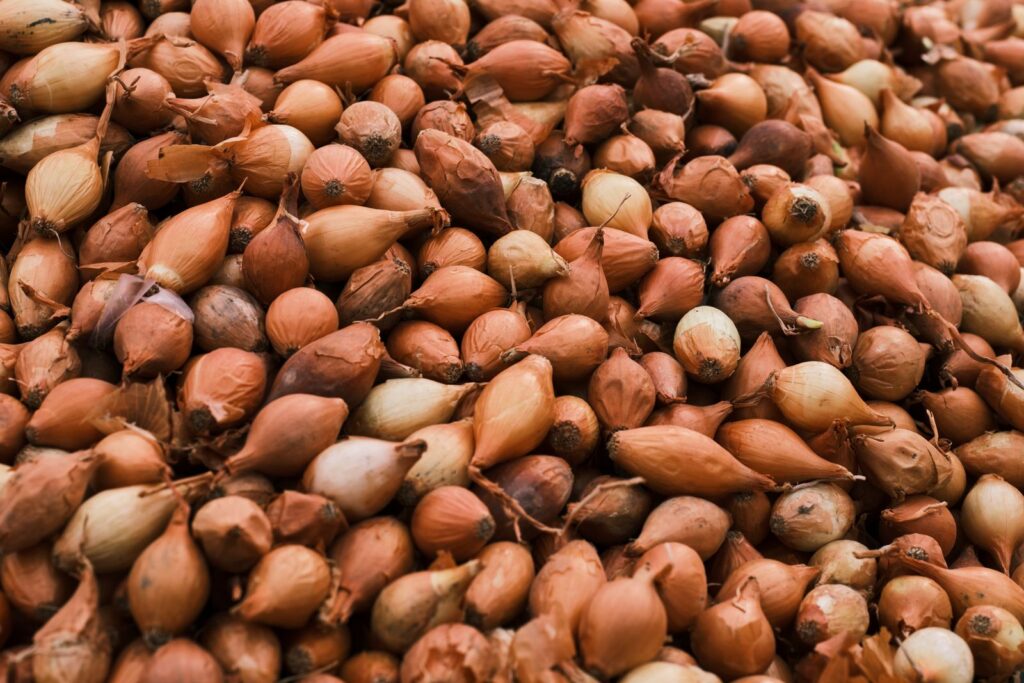
Because many plants are limited by raw material season and quality, not by dryer size. In September 2026, the Times of India reported that onion dehydration units in Mahuva, Gujarat, usually run only from February to April and proposed processing Maharashtra onions to extend the season to about six months.
The same report noted that Gujarat onions have total soluble solids (TSS) of about 15–16%, against 11–13% for Maharashtra onions, and that higher solids improve recovery of finished product (Times of India, 9 September 2026). The proposal was a request from local operators to a visiting delegation, not an approved programme. It still makes a useful engineering point: a longer season adds output without new dryers, while lower-solids raw material quietly reduces what the same dryer can produce.
How do you find the bottleneck in a drying line?
Measure the line under steady, full-load conditions and compare every stage with its design limit. Log feed rate, feed and product moisture, air temperatures, airflow, fan loads, steam or fuel use and product rate together. A mass and energy balance then shows whether the dryer is short of heat, air or residence time, or whether another stage is holding it back.
- Choose a representative product and run the line at the highest stable rate for 24–72 hours.
- Record feed and product moisture on a stated wet basis, with sampling times.
- Record zone temperatures, belt speed or bed depth, fan speeds and damper positions.
- Meter heat input: steam flow, fuel use or thermic fluid heat.
- Calculate water evaporated and heat per kg of water; see the GTI guide to dryer capacity and evaporation load.
- Note every stage at 100%: valves fully open, fans at maximum, belt at minimum speed, packing at its limit.
- Check downtime: start-ups, cleaning, product changes and waiting for raw material.
What are the common bottlenecks and their fixes?
Heat input, airflow, residence time and the stages around the dryer. Each has a clear signature in the survey data. Matching the fix to the signature avoids the most expensive mistake in brownfield projects: enlarging the dryer when the limit was the boiler, the cooler or the packing line.
| Constraint | Typical signature | Possible fixes |
|---|---|---|
| Heat input | Steam or fuel valve fully open; zone temperatures below set point at full feed | Larger heater coils, higher steam pressure, added heater, boiler or thermic fluid heater upgrade |
| Airflow | Fans at maximum speed; high exhaust humidity; wet product at normal temperatures | Fan upgrade, better air distribution, sealing air leaks, exhaust damper review |
| Residence time or belt area | Belt at minimum speed or bed at maximum depth; product still wet | Added tier or zone, longer bed, after-dryer, pre-dewatering of feed |
| Spray dryer evaporation | Outlet temperature cannot be held at higher feed rates | Higher feed solids from an evaporator, higher inlet temperature where the product allows, an added fluid bed stage |
| Upstream preparation | Dryer waits for feed; slicer, blancher or dewatering at capacity | Upgrade preparation equipment; add surge capacity |
| Downstream handling | Cooler, mill, sifter or packing line at limit | Upgrade cooling, milling or packing; add buffer storage |
| Operating days | Line idle outside raw material season | Season extension, second raw material, stored or pre-processed feed |
For vibratory fluid bed dryers, bed area and air distribution usually set the limit, so a capacity step often means a larger model or an added section rather than more heat. As a reference point, GTI’s confirmed VFBD ratings for desiccated coconut are Standard (450–550 kg/h) and Jumbo (650–750 kg/h) of dried product; other products need their own trials. See also the GTI vibratory fluid bed dryer page. For belt and band dryers, GTI states capacity as dried product output; see the band dryer page. For spray dryers, see how to size a spray dryer.
How does raw material solids content change dryer output?
Strongly, when the dryer is limited by evaporation. Lower solids mean more water to remove for every kilogram of finished product. If the dryer can evaporate only a fixed amount of water per hour, its product output falls roughly in proportion, even though fresh feed throughput barely changes.
Worked example: onion at 16% versus 12% solids
Illustrative calculation, not data from any plant. TSS is used here as a proxy for total solids, which are usually somewhat higher. Product moisture is 6% wet basis. The dryer is assumed to be evaporation-limited.
| Per tonne of prepared onion | 16% solids | 12% solids |
|---|---|---|
| Dry solids | 160 kg | 120 kg |
| Product at 6% moisture (solids ÷ 0.94) | about 170 kg | about 128 kg |
| Water to evaporate | about 830 kg | about 872 kg |
| Water per kg of product | about 4.9 kg | about 6.8 kg |
| Relative product output at the same evaporation rate | 100% | about 71% |
Switching from 16% to 12% solids onion cuts product output by roughly 29% on the same dryer, while fresh onion throughput falls by only about 5%. Heat per kg of product rises by about 40%. A season extension with lower-solids raw material therefore needs its own mass balance; it may also expose a heat or airflow bottleneck that the main season never reached. For more on onion lines, see the onion dehydration plant guide.
When is a parallel line better than upgrading the existing one?
When the existing line would need changes to several stages at once, when production cannot stop long enough for tie-ins, or when the plant needs a second product. A parallel line costs more but adds redundancy. An upgrade costs less but carries more risk of hidden limits in old equipment, structures and utilities.
| Factor | Upgrade existing line | Add a parallel line |
|---|---|---|
| Shutdown needed | Yes, for tie-ins and modifications | Short, for utility tie-ins only |
| Capacity gain | Usually limited by the next bottleneck | Set by the new line’s design |
| Redundancy | None added | Second line can run during maintenance |
| Space and utilities | Uses existing footprint; may hit utility limits | Needs space, building and utility capacity |
| Main risk | Old structures, controls and documentation | Capital cost and raw material supply |
What does a brownfield EPC upgrade involve?
Engineering, procurement and construction inside a running plant. The scope adds work that a new line does not need: surveys of existing equipment and structures, planned shutdown windows, tie-ins, updated controls and documents, a safety review of the change, re-commissioning and a new performance test against revised figures.
- Survey existing dryer, structure, foundations and utilities, and check old drawings against what is installed.
- Plan tie-ins and shutdown windows around the raw material season.
- Review fire, dust and electrical safety under a formal management of change; see the dust explosion protection checklist.
- Update the PLC program, interlocks and HMI; see drying plant automation.
- Re-commission and run a performance test on the new capacity; see belt dryer commissioning.
- Hand over updated drawings, manuals and training.
Frequently asked questions
Debottlenecking means finding the single stage that limits a line’s output, such as heat input, airflow, residence time, preparation or packing, and removing that limit with the smallest change that delivers the extra capacity.
Sometimes, if the product tolerates it and the dryer is heat-limited. But higher temperatures can damage quality, increase fire risk and move the bottleneck to airflow or the cooler, so check with a survey and trials first.
Lower-solids raw material carries more water per kilogram of product. An evaporation-limited dryer then makes less product per hour. In the article’s onion example, moving from 16% to 12% solids cuts output by about 29%.
Typically 24–72 hours of steady, full-load operation with logged data and moisture samples, followed by the mass and energy balance. Longer surveys may be needed where raw material varies through the day.
About Genex Tech Industries LLP (GTI Group)
Genex Tech Industries LLP (GTI Group) designs and manufactures industrial dryers, including band dryers, vibratory fluid bed dryers and spray dryers, and supports turnkey and upgrade projects. Its published capabilities include PLC/SCADA automation, installation, commissioning and training. For food dehydration lines, see fruit and vegetable dehydration plants on foodtechprojects.com, and on this site the drying machines overview. The head office is at 10C Middleton Row, Kolkata 700071, India.
Sources and authorship
- Times of India (Rajkot), “Maharashtra onions could double use of Mahuva’s dehydration capacity”, 9 September 2026 (operating season, TSS figures and the operators’ proposal).
- Published band dryer, vibratory fluid bed dryer, spray dryer and dryer capacity pages of Genex Tech Industries LLP (GTI Group).
The worked example is an illustrative calculation from stated assumptions. This article was prepared by the editorial team of Genex Tech Industries LLP (GTI Group) with AI editorial assistance. It has not been reviewed by a named engineer, and no individual is cited as having approved the technical content.
Next step
Need more output from an existing drying line? Email mktg@gtidryers.com or use the contact page. Send your dryer type and age, product, current and target output, feed and product moisture, heat source and utility limits, operating days per year and the plant location.